Thoughts after the Queer-Class Relations Conference
Feeling Re-Validated

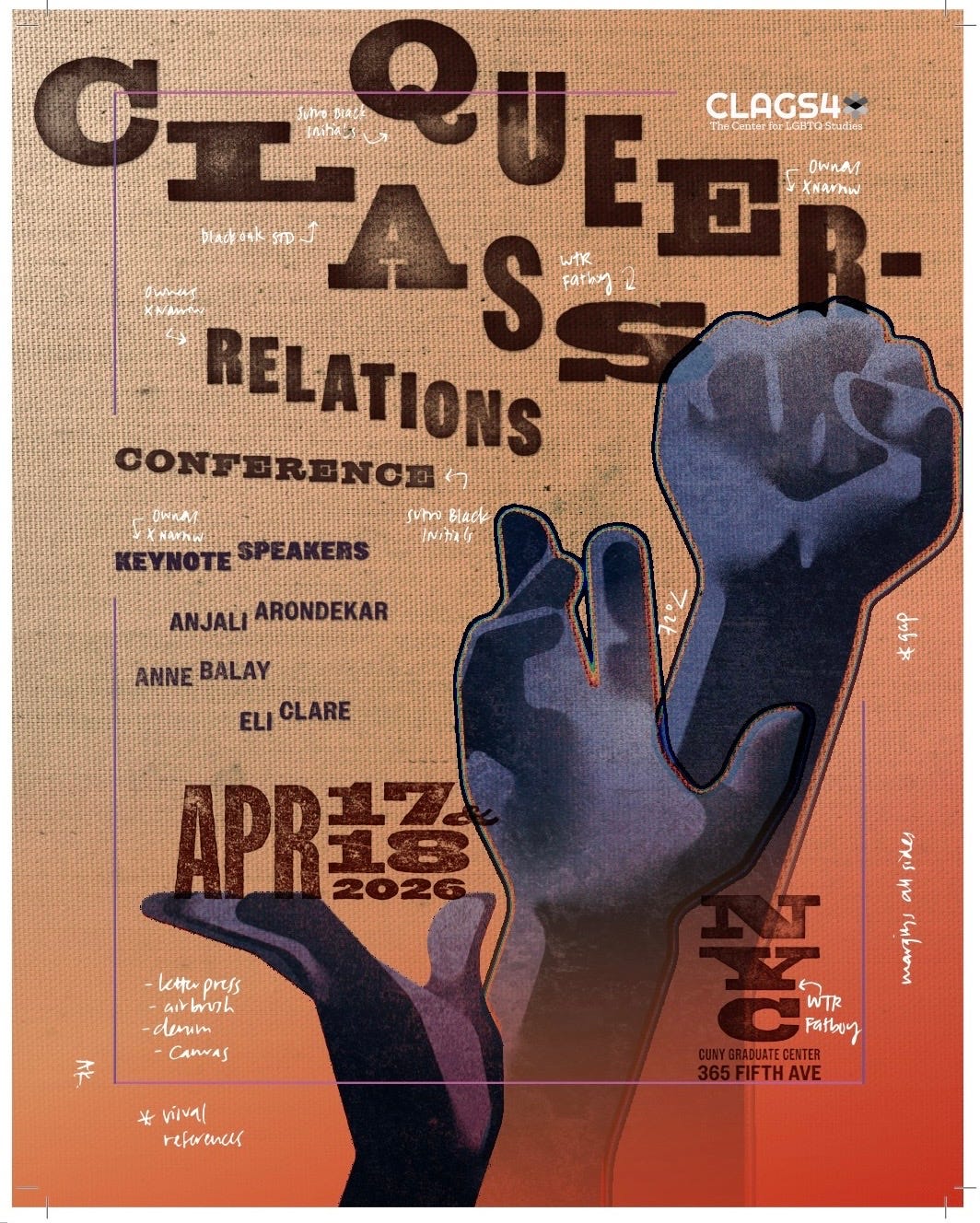
On April 17, I presented a paper at the Queer-Class Relations Conference at CLAGS: The Center for LGBTQ Studies at CUNY on a panel curated by Dale Corvino. We’d discussed his idea for a panel on sex work and the subversion of class when I bought his book at Elyssa Maxx Goodman’s Miss-Manhattan non-fiction reading series. His proposal was accepted by the conference committee, and I’d been looking forward to it for months. I thought it would be easy-breezy lemon squeezy because I already had the paper on sex work and class that I had published in the Radical History Review in 2024. It was finished, it was related to the topic of the conference, and it had been published, so I could refer people to it. So uncomplicated! No stress at all!
Except that a week before the conference, I was looking at a head of romanesco cauliflower, and I suddenly got obsessed with all the hierarchies I’d observed within the sex industry.

Above: a head of romanesco. It’s a Fibonacci fractal. It is tasty. Also, as a metaphor for class hierarchies, it’s pretty valid.
So, two days before the conference, I started an entirely new essay, driven by the sight of this vegetable. I stressed, but I got it done. I wrote about five thousand words and cut it down to two thousand, partly by putting most of my parentheticals into the footnotes.
I wasn’t able to attend as much of the conference as I would have liked because I was in the midst of producing a student showcase taking place on April 19. However, I made it on the 17th in time for lunch in the central hall before our 1.30 session. I bought books, starting with a book by Judy Grahn, who was one of my favorite poets in the 1970s and whose work still holds up for me. I also bought a book on women in the circus.
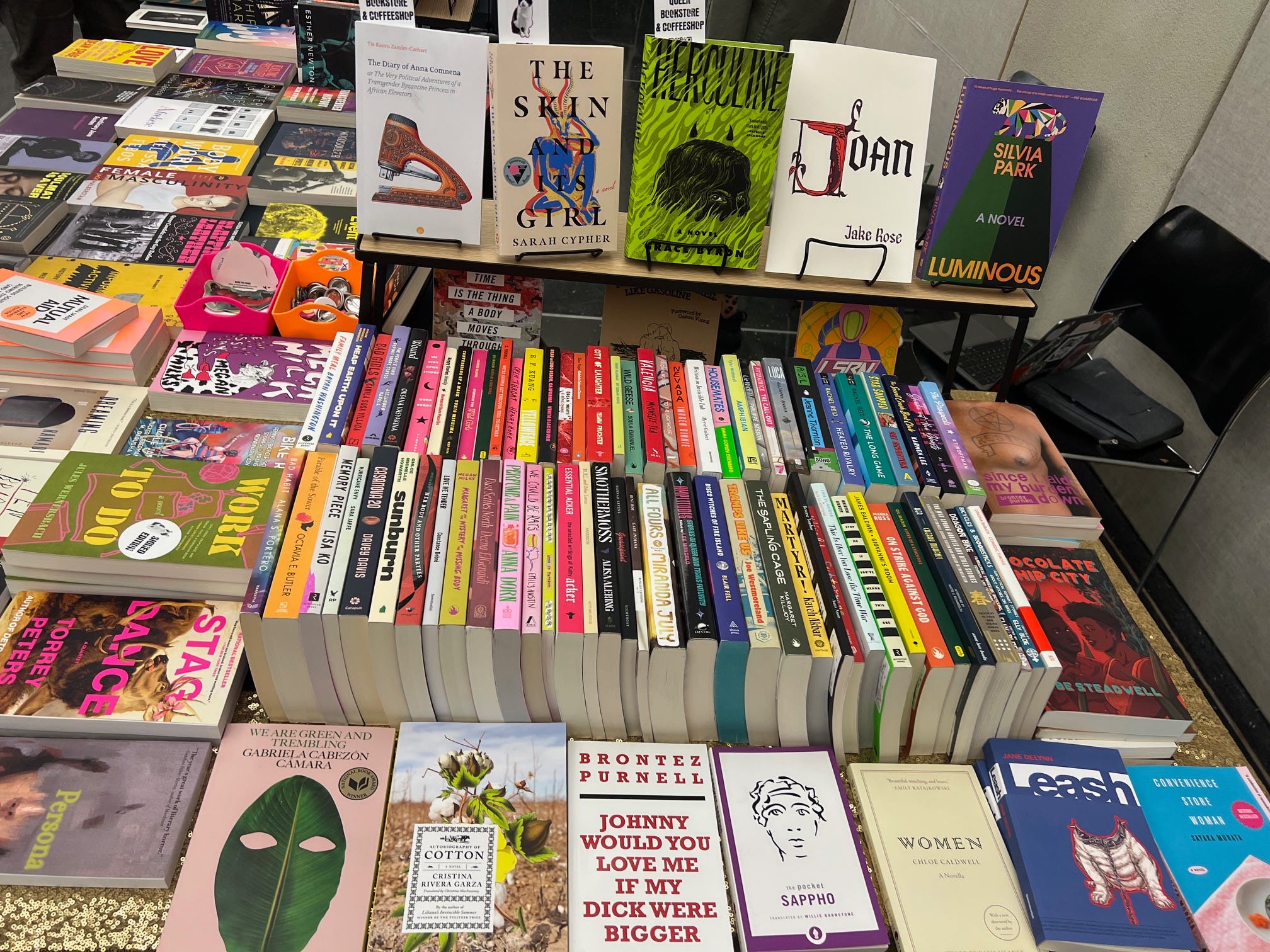
Above: A bit of the marvelous book table from Hive Mind Books.
While I was eating and chatting with Dale and burlesque star and academic Alyssa Kitt, a fabulous young person in a super stylish black denim dress and metallic green shoes – just SO MUCH GORGEOUS STYLE – came over to me and said, “Are you Jo Weldon?” I said yes. They went on, “I love your work! I’m talking about your article about class in my presentation.” “No!” That was the very article I’d been planning to read before the vegetable took over my brain. They couldn’t come to my panel because the panel they were on was at the same time as our panel, so it felt like I was going to be in two places at once.
This young person said the nicest things, and made me feel like a rock star. I do not usually feel like a rock star in academic spaces, as I’m not an academic, and I’m constantly concerned about letting the dedicated academics know I respect the work that goes into what they do. I know I know things, and I know I can share information and ideas in meaningful ways, but do I know the current literature on a topic? Sadly, not really. As much as I’d like to do more, I am rarely a member of the conference-going class. I don’t know who-all is doing what. When Alyssa told me that super-smart people had already written about the same problems I’d had with Ariel Levy’s attitude about “female chauvinist pigs,” I’d had no idea — though of course I was relieved to hear it. (Notice I did not link to Levy’s work.)
Two members of our panel weren’t able to make it, because one wasn’t feeling well and one was afraid to travel to the US, so it was just Dale and me. It felt a little awkward at first, but Dale talked about them and showed them onscreen. While he was reading his paper, he invited me to talk with him during his presentation. I loved this – I like interaction. I recently gave my lecture on the history of leopard print at SAGE, and many in the audience interjected with knowledge and questions throughout my presentation; instead of feeling invasive or like heckling, it felt participatory. I hope to make interaction a bigger part of my next presentations.
However, Dale and I did so much back-and-forth, and answered so many questions, that I realized I was running out of time to read my paper, so I reminded him and started reading it. I got about five minutes in and asked the moderator how much time I had left, and she said, “About a minute.” (She wasn’t a bad moderator; she just thought that Dale and I were co-presenting and didn’t realize I had a paper as well.) I was actually kind of relieved, because I had mainly been worried about my paper being too long, so I jumped to the last page and wrapped it up.
You can read it if you like. It still hasn’t had a proper edit, so feel free to make suggestions.
I got to see other panels on sex work, each remarkable in its own way. Notably, trans people and people of color were leading them. While trans people aren’t the majority of people doing sex work, their contributions have been overlooked, and their vulnerability in this industry needs to be understood, so this warmed my heart. I’ve worked with trans people my entire adult life, and it’s powerful to see them get their due and get their speaking time. Everything they had to say got me thinking about that romanesco all over again.
The final panel of the day was a roundtable about Amber Hollibaugh. I had met Amber back in the 1990s, when I was participating in my first conferences and meeting other sex workers who were out about the work, both at the conferences and through the networks. I had attended both the International Conference on Prostitution and the First World Pornography Conference in 1997. This was something big for me – I’d been treated like a crackpot and a traitor to my gender, and it was very uplifting for me to meet all of these people who had some of the same ideas and values I did, who felt oppressed (and I was, since they literally prevented me from speaking on occasion, and said I was lying or brainwashed when I did speak) by some of the anti-porn-feminist folks who were given such absolute credibility at the time. There had already been reactions against them, but they definitely held sway over the discourse.
The panel on Amber’s legacy brought that feeling back again – the relief that my experiences weren’t unique, accompanied by the sorrow that they weren’t. The sense that listening to each other and being heard outside of our intimate circles truly mattered. The idea that we deserve a quality of life, just like anybody, and we know it. The fact that the needle had moved because of these activists’ work. The knowledge that someone like Amber was appreciated and celebrated.
I haven’t yet found a recording of this panel, but I found this panel from a remembrance of her:
I wanted to see the final panel at the conference, but I had a dizzy spell (I’ve been having some hearing and vision issues and they are truly fucking me up) and had to go home. I was curious to hear whether they discussed how integral sex work was to the conference, and to the history of queer spaces and queer histories. It felt to me like an already accepted fact, and in all my lifetime, I never expected to feel this way.

Above: Me subverting class in The Strand’s Rare Book Room, 2012?. Photo by David Henry Sterry.
In case you’re curious, here’s the paper I didn’t read: “Whatever Happened to Class?”
The one in the library, I mean.
This is awesome, congratulations! I loved the paper on Whorearchy.